Since the definitive closure of Tati stores, the brand name has become a keyword of aspiration on marketplaces and specialized sites. Future brides searching for “Tati wedding dress” are looking for an elegant model at a low price, not a brand that no longer exists as such. Understanding this shift allows for better targeting of searches and identifying real alternatives in the 2024 market.
Affordable wedding dress: where does the Tati segment stand in 2024
The term “Tati” now serves as a shortcut to designate a very specific price range. The dresses that appear under this query on marketplaces share common characteristics, which are useful to compare with other market segments.
| Segment | Indicative price range | Dominant materials | Purchase channels |
|---|---|---|---|
| “Tati” type (marketplaces) | Entry-level | Polyester, synthetic tulle, applied lace | Amazon, AliExpress, low-cost specialized sites |
| Bridal ready-to-wear (Zara, COS, La Redoute) | Accessible mid-range | Chiffon, crepe, lightweight satin | E-commerce, physical stores |
| Accessible designers (entry-level Pronovias, Reformation) | Mid-range | Mixed silk, Calais lace, chiffon | Showroom, fitting by appointment |
| Haute couture / bespoke | High-end | Silk, organza, hand embroidery | Workshop, fashion houses |
This table highlights a gap in materials rather than cuts. Tati type dresses adopt the same silhouettes as mid-range, but with synthetic fabrics that alter the drape and durability.
For those looking to find a Tati wedding dress in this price range, the key lies in the choice of materials and checking the finishes before purchase.
Bohemian and rustic aesthetics: the trend redefining affordable bridal wear
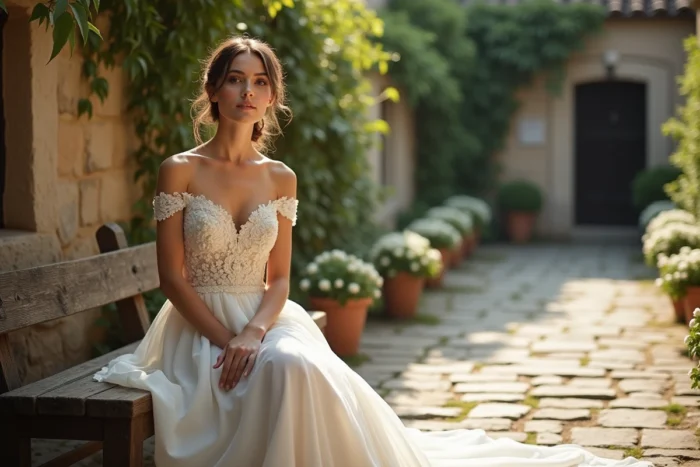
The entry of bohemian aesthetics into the affordable dress segment marks the highlight of the 2024 season. Low-priced models no longer aim to imitate the traditional princess dress. They lean towards fluid cuts, designed for outdoor ceremonies or intimate weddings.
A telling example: dresses sold for around 150 euros on sites like Cortika combine a delicate lace top, a moderate V-neckline, and a long flowing chiffon skirt. This description matches point by point the codes of rustic weddings, which have long been reserved for mid or high-end brands.
What distinguishes an affordable bohemian dress from a low-quality model
The bohemian style is more forgiving of textile quality discrepancies. A flowing chiffon cut masks flaws that a satin mermaid dress would immediately reveal. This explains why this style has dominated the entry-level segment for two seasons.
- Synthetic chiffon and muslin provide an acceptable drape at a low cost, where cheap satin appears stiff and shiny
- Details in applied lace on a simple bodice are enough to create a “handmade” effect without increasing production costs
- Alternative colors (champagne, sage, deep blue) help to mask slight shade variations between fabric panels
This shift towards bohemian is not just aesthetic. It makes the dress reusable after the wedding, an argument that increasingly weighs in the purchasing decision.
Buying online or in-store: verification criteria for an affordable dress
The majority of dresses that appear under the query “Tati wedding dress” are sold exclusively online, with no possibility of trying them on beforehand. This parameter radically changes the selection method.
Checklist before ordering online
- Customer reviews with worn photos are worth more than catalog images, which are often retouched or taken on professional models
- The size guide should indicate measurements in centimeters (bust, waist, hips), not just S/M/L sizes that vary by manufacturer
- The exact textile composition must be listed in the product sheet: a model that does not specify the percentage of polyester or polyamide generally hides poor quality
- Delivery times often exceed several weeks for dresses shipped from abroad, a factor to anticipate if the wedding is approaching
In contrast, ready-to-wear brands like Zara or La Redoute offer white or nude dresses in a comparable price range, with the advantage of in-store fitting or free returns. These models are not marketed as wedding dresses, but their cut and color are perfectly suited for that purpose.
The showroom and fitting: an underestimated advantage
Some specialized budget wedding boutiques offer fitting sessions by appointment. The interest goes beyond simple comfort: touching the fabric, checking the seam finishes, and evaluating the drape on oneself help to avoid unpleasant surprises. A twenty-minute fitting can save a complicated return and weeks of waiting.
Tati wedding dresses and second-hand: a growing parallel market
Old Tati dresses are still circulating on resale platforms. Vinted, Leboncoin, and specialized sites like Once Wed regularly list vintage models, sometimes never worn. The second-hand bridal market aligns prices with the original Tati segment.
This avenue presents a double advantage. The model has already been made, so the drape and quality are verifiable through real photos from the seller. The price, already low originally, drops even further after a first purchase.
The main risk concerns alterations. A second-hand dress almost always requires adjustments by a seamstress, the cost of which can represent a significant part of the total budget. Checking the exact measurements of the dress before purchase remains the most reliable precaution to limit these additional costs.