Each new season brings its share of silhouettes spotted on the runways, but the real question this season lies elsewhere. The autumn-winter 2026-2027 fashion trends create a tension between two opposing directions, clean minimalism and retro drama, which opens up a playground for building a unique style.
Contrast of materials and mix of silhouettes: the key to a personal look
Have you ever noticed that an outfit made up of trendy pieces can look dull if everything comes from the same style? The classic trap is to pile on clothes from a single inspiration. This season, the difference is all about contrast.
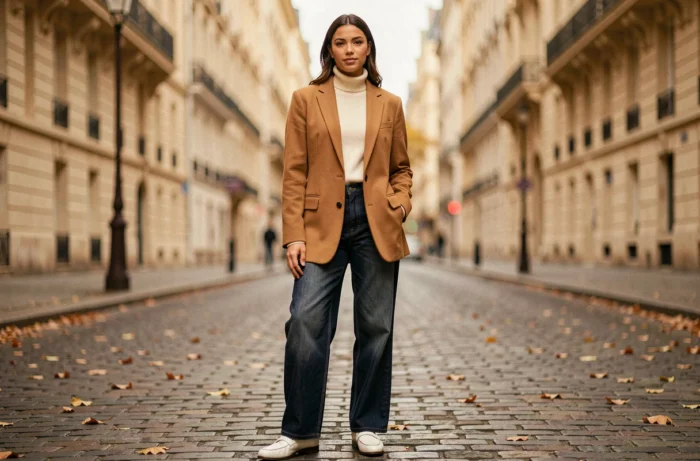
In practice, this means pairing a structured tailoring piece (a fitted blazer, pleated trousers) with an element of opposing texture. A voluminous faux fur worn over a flowing fine-knit dress creates an immediate visual break. The contrast of materials replaces the accumulation of trendy pieces as the driving force behind a singular style.
This principle also works with proportions. A fitted top paired with oversized trousers, or conversely, an oversized jacket worn over a short skirt, produces a silhouette that isn’t replicated elsewhere. The idea is not to follow a strict rule, but to cross two different fashion imaginations in one outfit.
To explore these associations and find other seasonal avenues, the fashion category on Blognet News regularly documents this type of approach through style rather than product.
Autumn-winter 2026 colors: purple and bright shades as signatures
This season’s palette is organized around a paradox. Black remains omnipresent in collections, but it coexists with saturated colors that are anything but discreet. Purple, in particular, runs through the shows in several forms: deep eggplant, lilac, bright purple.
Why this color over another? Purple sits halfway between dramatic and refined. It works just as well on a long coat as on a standalone accessory. Wearing purple against a black base is enough to anchor an outfit in the season without excessive effort.
Bright colors in a broad sense (red, electric blue, emerald green) play a similar role. They serve as focal points in an otherwise sober silhouette. A common mistake would be to multiply strong shades in the same look. A single colored piece, worn intentionally, creates a sharper effect than a patchwork of colors.
Pairing bright colors with textured materials
A purple twisted knit sweater, a red corduroy jacket, a green pebbled leather bag: color takes on another dimension when accompanied by texture. Texture adds depth to a bright color and avoids the “flat color block” effect found on basic pieces in smooth polyester.
Identity accessories: charms, lucky charms, and regressive objects
This season’s accessories are not limited to bags and shoes spotted in store windows. A less documented phenomenon is gaining momentum: the use of small personal objects as style markers.
Mini plush toys attached to a bag, quirky cardholders, charms, and embraced lucky charms, these elements function as visual signatures. They do not follow any trend dictated by the runways. Charms and sentimental objects become identity markers, not just simple decorations.
This approach is interesting because it is, by definition, impossible to copy. No one else carries exactly the same assembly of small objects. A few guidelines for integrating this trend without falling into overload:
- Limit the elements attached to one or two per bag, to maintain visual clarity
- Choose objects that have a personal story rather than gadgets bought for the occasion
- Vary the attachment points: bag handle, coat buttonhole, jacket zipper
Oversized pieces and tailoring: two fashion trends to combine, not choose
The temptation is to categorize trends. On one side, oversized (baggy sweaters, XXL coats, loose trousers), on the other, structured tailoring (fitted blazers, pleated trousers, tailored shirts). The autumn-winter 2026-2027 season does not require choosing a side.
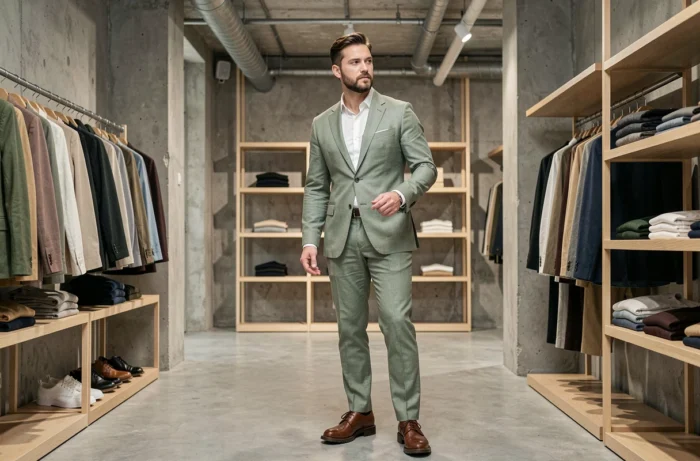
The combination of both registers produces the most interesting silhouettes. A tailored blazer worn open over an oversized chunky knit sweater, for example, creates a balance between relaxed and structured. Mixing oversized and tailoring avoids the uniform total look that thousands of people are already wearing.
Three concrete combinations for this season
- Oversized long wool coat + fitted ribbed knit dress + low-heeled ankle boots
- Loose sweater falling below the hips + narrow pleated trousers + loafers
- Structured shoulder blazer + barrel jeans (the wide cut of the moment) + minimalist sneakers
The barrel jeans deserve a mention. This wide and slightly tapered cut downwards stands out as an alternative to the classic straight jeans. The barrel jeans provide bottom volume without the pajama effect of joggers. They work well with both sneakers and ankle boots.
Personalization of style: the true thread of the season
The most defining trend of the 2026 season is not a piece or a color, but an attitude. The personal appropriation of codes replaces the dictate of the seasonal total look.
This translates into concrete choices. Wearing a retro element (a bow tie collar, a 70s pleated skirt) in an otherwise contemporary outfit. Pairing a designer piece with a basic from a mass retailer without hesitation. Repurposing a garment from its original use, like wearing a scarf as a belt or a vintage brooch on a leather jacket.
The goal is not to accumulate the season’s fashion trends but to select two or three that resonate with what you already wear. A unique style is not built by starting from scratch every autumn. It is built by grafting a few new elements onto a wardrobe that reflects you.