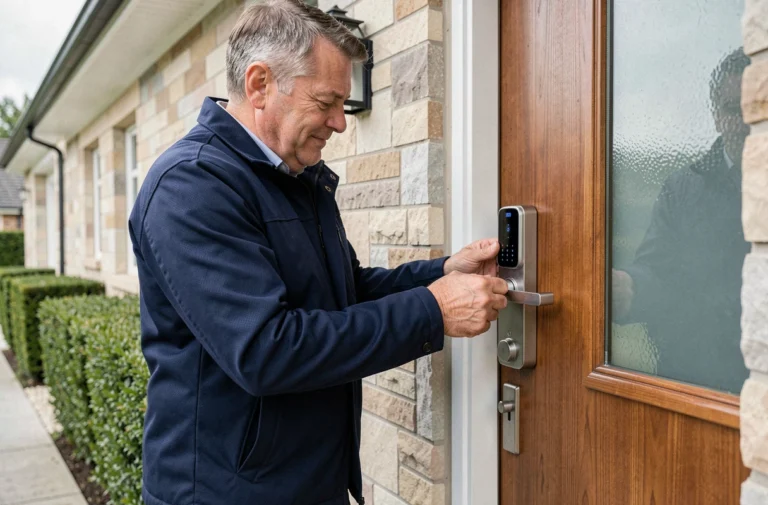
This summer peak reminds us that protecting a home goes beyond just locking the door. SSMSI data shows a stable global trend, even slightly declining since the end of 2024, but occasional spikes, especially in summer, necessitate viewing home security as a permanent issue.
Burglaries in rural areas: an underestimated risk that changes the game
Competing articles almost exclusively target urban or suburban homeowners. The figures tell a different story. Between 2020 and 2025, several rural departments like Haute-Loire, Cantal, or Ardèche recorded increases of 15 to 23% in residential burglaries, while more urbanized departments like Rhône or Puy-de-Dôme showed a decline.
This shift in risk is partly explained by the isolation of homes, low neighborhood density, and longer response times for law enforcement. A house on the edge of a hamlet, with no direct neighbors, represents a more accessible target than a suburban home equipped with cameras.
For homeowners in rural areas, the question is not whether an alarm system is sufficient, but how to compensate for the lack of natural surveillance provided by neighbors. The resources available on Equivok’s main page allow for exploring different approaches tailored to each housing configuration.
Physical vulnerabilities: windows and doors, measurable weak points
The majority of break-ins occur through the most obvious access points. Ground floor windows and the front door account for the overwhelming majority of burglaries. Before investing in electronics, a diagnosis of the physical weak points of the home yields concrete results.
The true value of mechanical reinforcement
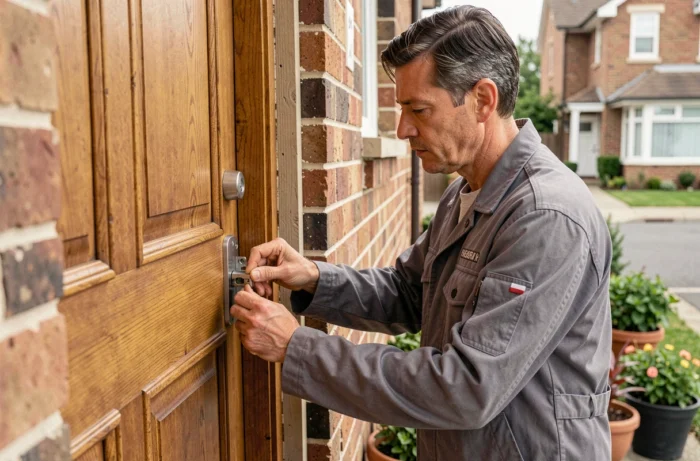
A quality lock cylinder (A2P certified) resists picking significantly longer than a standard cylinder. Anti-pinch corner brackets on the door frame prevent the use of a crowbar, a technique still widely employed.
Regarding windows, roller shutters with automatic locks provide a real physical barrier. A closed shutter extends the break-in time by several minutes, which is often enough to deter an opportunistic burglar. Field reports vary on this point depending on the types of shutters, but the principle of slowing down remains documented by security professionals.
- A2P certified lock: three levels of resistance (one, two, or three stars), the minimum level already offers superior protection compared to standard European cylinders
- Anti-pinch corner brackets and hinge protectors: prevent door removal and forced entry by leverage, two common techniques on older doors
- Burglary-resistant glazing: laminated glass (type SP10) does not shatter in one blow, generating noise and delay
- Roller shutters with automatic locking: mechanical resistance varies by material (aluminum or PVC), but the mere presence of a closed shutter alters the burglar’s risk-benefit calculation
Connected alarm and surveillance camera: what technology really brings
Connected alarm systems and surveillance cameras dominate the residential security market. Their actual effectiveness deserves to be examined without commercial bias.
Alarm with remote monitoring or standalone alarm
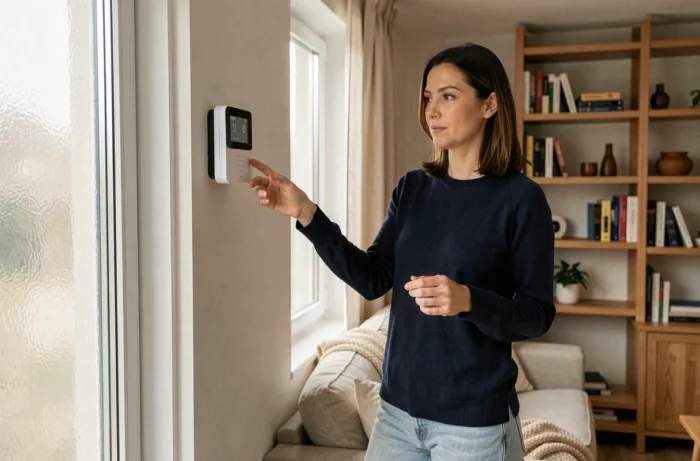
A standalone alarm triggers a siren. An alarm with remote monitoring additionally alerts a monitoring center that can notify law enforcement. Remote monitoring reduces the time between the intrusion and the intervention, but it involves a monthly subscription and dependence on the communication network (Wi-Fi, GSM, or landline).
In rural areas, network coverage can be problematic. A GSM alarm does not work without mobile signal, and a prolonged power outage renders a Wi-Fi system inoperative unless a backup battery is provided. These technical limitations are rarely mentioned in commercial guides.
Outdoor cameras and legal framework
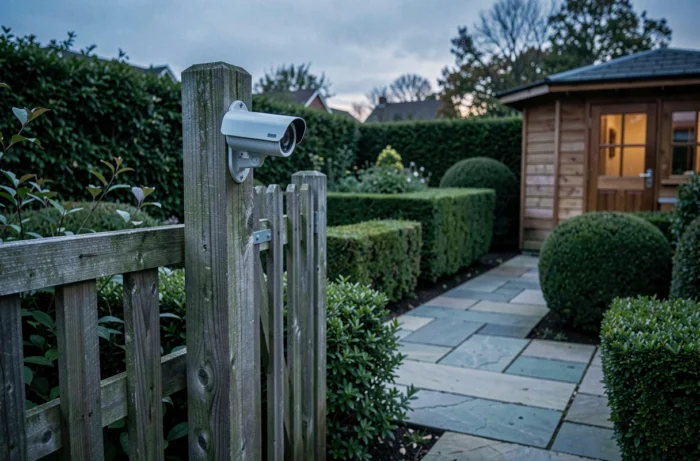
Installing a surveillance camera at home is legal, but the field of view must not film public roads or a neighbor’s property. The CNIL strictly regulates the use of domestic cameras. Poor positioning can lead to a formal notice or the obligation to dismantle the device.
Connected cameras transmit their images via the home network. A default password on the router or outdated firmware exposes the video stream to unauthorized access. Securing the Wi-Fi network is a prerequisite before installing a connected camera.
Simulating presence: effectiveness and limits of a free method
Programming automatic lights, leaving a radio on, asking a neighbor to collect the mail: these simple gestures are repeated in every security guide. Their effectiveness relies on a verified principle: most burglars observe a house before acting and look for signs of prolonged absence.
The available data does not allow for precise quantification of the deterrent effect of presence simulation. However, posting vacation dates on social media remains a documented risk factor. Geolocated posts or real-time stories signal an absence to a potentially very large audience.
- Timer on indoor lights: modest cost, immediate visual effect from outside
- Mail forwarding or collection by a neighbor: an overflowing mailbox signals an absence better than any other clue
- Garden maintenance during vacations: an uncut lawn or closed shutters in broad daylight for two weeks attracts attention
The combination of mechanical, electronic, and behavioral measures forms a more deterrent set than any of these approaches taken in isolation. Vacation periods remain the time when vigilance should be most structured, whether the home is in the city or in a seemingly quiet rural department.