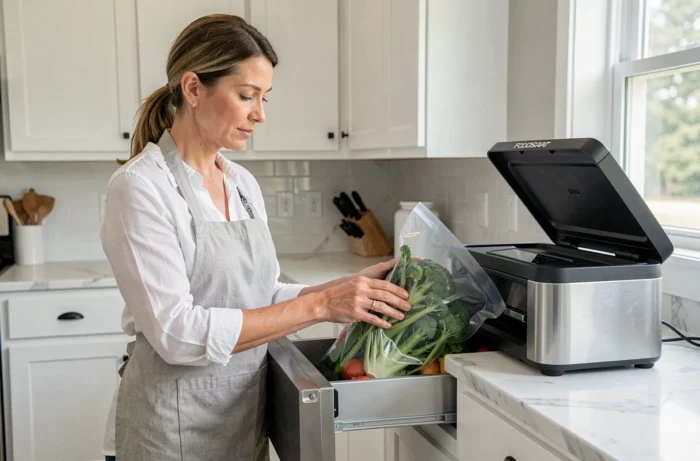
The FoodSaver FFS005X is a home vacuum sealing machine equipped with multiple functions: four suction speeds, two sealing levels, and a roll compartment with an integrated cutter. The manual provided with the device covers the technical handling, but it leaves several points related to food safety and the actual limits of vacuum preservation in the dark.
Suction and sealing of the FFS005X: what the technical manual does not prioritize
The FFS005X manual details four suction speeds (including a manual mode for delicate foods) and two sealing levels suitable for dry or moist foods. These settings are presented linearly, without clear priority indications based on the type of food.
The manual suction mode, for example, is described as “useful for fragile or very fragile foods.” This wording remains vague. A soft-fleshed fruit and smoked fish are both “fragile,” but they require different speeds and sealing levels. Consulting the FoodSaver FFS005X user manual allows you to find all the settings, but the manual would benefit from providing a cross-reference table of food/type of setting rather than just a list of functions.
The removable drip tray (dishwasher safe) collects excess moisture and juice during suction. This technical detail has a direct practical consequence: a full tray compromises the sealing integrity in subsequent cycles. The manual mentions this, but at the end of the maintenance section, not when the user is programming their moist sealing.
Vacuum preservation and food safety: the blind spots of the FoodSaver manual
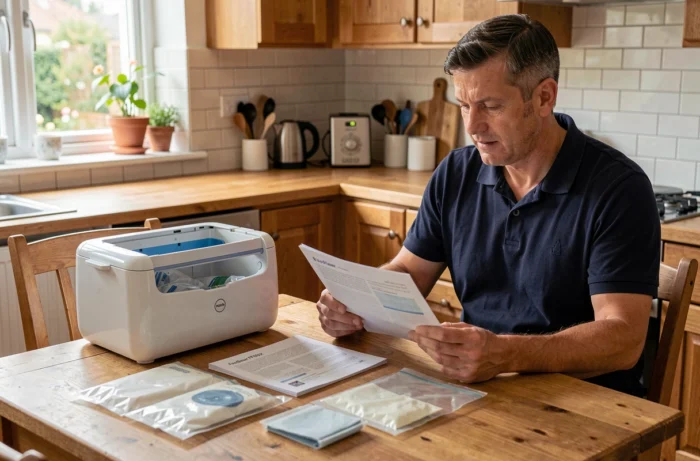
Recent guides on home food preservation emphasize a point that the FFS005X manual does not sufficiently develop: vacuum sealing does not replace the cold chain. Perishable items vacuum sealed must remain in the refrigerator or freezer. Preservation at room temperature is only acceptable for dry or dehydrated foods.
This distinction is absent from most of the “user manual” content of the FFS005X, which focuses on technique (bags, seals, speeds). Food safety recommendations also specify that a refrigeration period of about one to two hours is advised for hot portions before vacuum sealing, to avoid condensation in the bag.
Food recalls and limits of vacuum sealing
The RappelConso sheets published by French authorities (DGCCRF, DGAL) show recurring recalls for reasons such as the presence of foreign bodies or the break in the cold chain. Even a well-executed vacuum packaging does not compensate for inadequate storage. The FFS005X manual mentions storage conditions, but without explicitly linking vacuum packaging to microbiological risks associated with poorly controlled temperatures.
Visual inspection of food before vacuum sealing remains a safety step that the manual does not formalize. Checking for the absence of mold, suspicious odors, or discoloration before packaging should be included at the beginning of each cycle, not just in the general precautions.
FoodSaver bags and rolls: compatibility and real usage cost
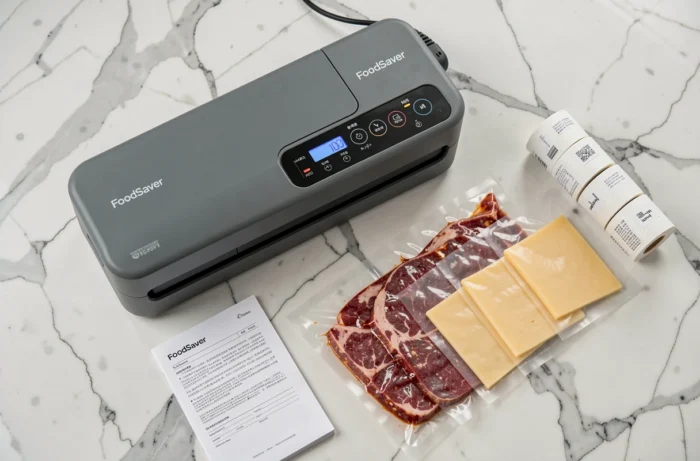
The FFS005X comes with a starter kit (bags of various sizes and a roll). The integrated compartment with cutter allows for custom bag cutting from FoodSaver rolls. This feature reduces material waste compared to pre-cut bags, but raises a question that the manual does not address: compatibility with third-party rolls.
FoodSaver recommends its own consumables. Field feedback varies on this point: some users report satisfactory results with generic embossed rolls, while others find less reliable seals. The manual does not specify the minimum technical characteristics (thickness, type of embossing) that a roll must meet to function properly with the device.
- Pre-formed FoodSaver bags are suitable for occasional use, but their unit cost is higher than cutting from a roll for regular volumes.
- The integrated cutter in the storage compartment eliminates the need for scissors, but the cut must be clean and perpendicular to the roll to ensure a tight seal across the entire width.
- Third-party rolls with diamond or lozenge embossing seem compatible in most cases, but no manufacturer guarantee covers their use with the FFS005X.
Maintenance of the FoodSaver FFS005X and device lifespan
The manual indicates to clean the drip tray after each use with moist foods and to check the cleanliness of the sealing bar. These instructions seem obvious, but they directly condition the longevity of the device.
A residue of dried juice on the sealing bar causes micro-leaks in subsequent bags. The user does not detect them immediately: the bag appears sealed, but loses its vacuum within a few days. Cleaning the sealing bar with a damp cloth after each session is the most cost-effective maintenance measure in terms of reliability.
Signs of wear to watch for
The manual does not detail the indicators for replacing the sealing gasket or sealing element. Two signals should alert:
- An abnormally long suction time to achieve vacuum, which may indicate a worn gasket or a motor losing power.
- Irregular seals (unsealed areas, residual air bubbles), often related to a dirty or deformed sealing bar.
- A higher-pitched motor noise than during the first uses, indicating increased effort from the vacuum pump.
The power of the device is 140 W, which places it in the range of home machines. This power is sufficient for regular use without straining the motor, provided that a resting time between cycles is respected (the manual recommends waiting a few minutes between two consecutive seals).
The FFS005X remains a device designed for home use. Its manual clearly covers basic operations, but issues of food safety, compatibility of consumables, and preventive maintenance deserve more in-depth treatment. Cross-referencing the manual’s instructions with current food preservation recommendations allows for better reliability and safety in using the device.