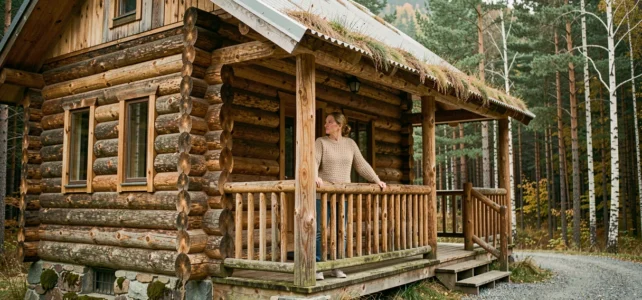
A wooden chalet situated on land that you own can serve as a primary residence, provided that it complies with a more stringent legal framework than one might imagine. The distinction between a simple leisure chalet and a permanent dwelling is based on urban planning criteria, environmental compliance, and connection to utilities. The key factor is not the ownership of the land, but the regulatory status of the construction.
RE2020 and wooden chalets: the standard that separates leisure from habitation
Since January 1, 2022, any new construction intended for habitation that is subject to a building permit must comply with the Environmental Regulation 2020 (RE2020). This standard imposes thermal performance thresholds, limits on energy consumption, and caps on carbon emissions throughout the building’s lifecycle.
For a wooden chalet, this requirement radically changes the situation. A model sold as “habitable” by a manufacturer is not necessarily compliant with RE2020. Without this compliance, the chalet remains legally confined to leisure or ancillary use, even if the insulation and interior comfort allow for year-round sleeping.
The question of living in a wooden chalet on your land is therefore no longer limited to the zoning of the local urban plan (PLU). It depends on the chalet’s ability to meet environmental requirements that apply to any new house. A chalet delivered assembled or in kit form that does not present a RE2020 thermal study cannot legally serve as a primary residence.
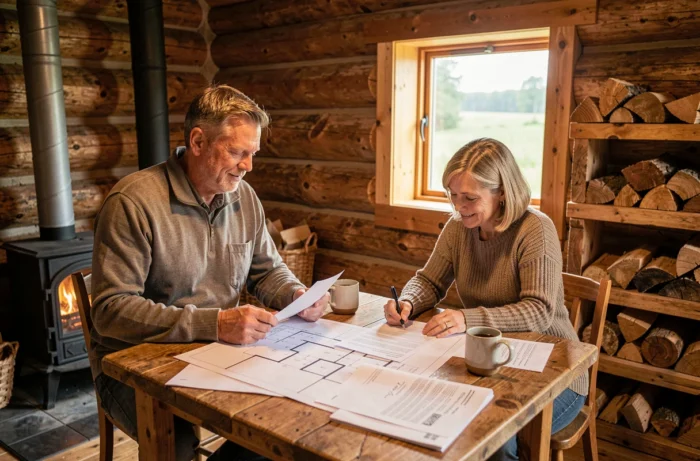
Lightweight Leisure Housing: a status incompatible with permanent living
The Urban Planning Code defines Lightweight Leisure Housing (HLL) as removable or transportable constructions intended for temporary or seasonal use. Many wooden chalets marketed fall into this category.
An HLL can only be installed in certain areas: residential leisure parks, camping grounds, classified holiday villages. Even on a buildable plot of land that you fully own, installing an HLL as a primary residence is prohibited.
The confusion arises from the apparent comfort of these structures. Some HLLs have bathrooms, equipped kitchens, and adequate insulation. The determining criterion is not the level of comfort, but the administrative status of the construction and the location defined by the municipality’s PLU.
Buildable land does not mean total freedom
Owning a plot classified as buildable allows for construction, but the PLU sets specific constraints: maximum height, permitted materials, architectural appearance, distance from property boundaries. A log cabin may be rejected in an area where regulations require tiled roofs or rendered facades.
Before purchasing a chalet, consulting the Local Urban Plan at the town hall remains the only reliable step. The operational urban planning certificate, which specifies whether a given project is feasible on a plot, helps avoid unpleasant surprises.
Building permits and surface area thresholds for a habitable chalet
The administrative procedures depend directly on the ground area of the chalet:
- Below 5 m², no authorization is required (except in protected areas).
- Between 5 and 20 m², a prior declaration of works is sufficient, with a processing time of about one month.
- Above 20 m², a building permit becomes mandatory, with a processing time of two to three months.
For a primary residence, the area almost always exceeds 20 m². Therefore, obtaining a building permit is the rule, not the exception. Beyond 150 m² of floor area, the involvement of an architect is mandatory.
The building permit implies that the chalet complies with all applicable standards for new homes: RE2020, accessibility, connection to sanitation networks (collective or individual). A chalet not connected to sanitation will not receive a certificate of conformity at the end of the works.
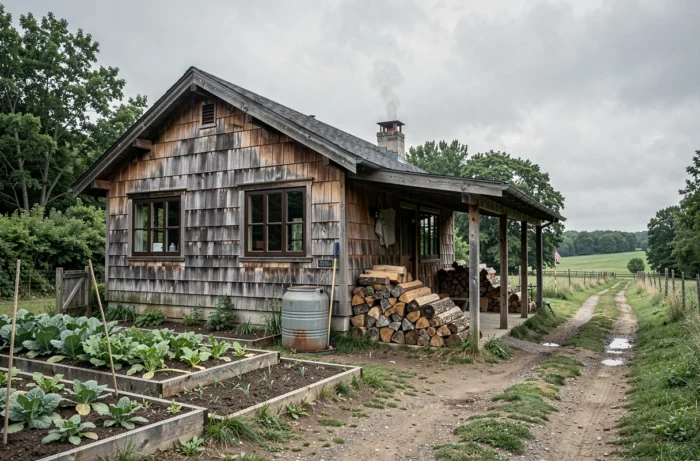
Insurance, taxation, and connections: often overlooked obligations
Living in a wooden chalet on your land incurs the same tax obligations as a traditional house. The construction is subject to property tax and development tax. The cadastral rental value of the chalet determines the amount of the property tax, calculated by the tax office after the construction declaration.
Home insurance is necessary. Wooden chalets present a higher fire risk than masonry constructions. Some insurers apply surcharges or require specific protection measures (detectors, regulatory clearing in forest areas).
Connection to utilities is a factor not to be underestimated:
- Drinking water and electricity: the cost depends on the distance between the chalet and the nearest connection point.
- Sanitation: in the absence of a sewage system, an individual sanitation installation (cesspool, micro-station) is mandatory and must be validated by the SPANC (Public Service for Non-Collective Sanitation).
- Road access: the PLU may require that the plot be served by a drivable road to obtain the building permit.
Wood maintenance and year-round durability
A chalet occupied year-round faces more constraints than a seasonal chalet. Regular maintenance of the cladding (stain or saturator every three to five years depending on exposure), checking the roof’s waterproofing, and treatment against wood-eating insects are essential for the structure’s longevity.
External insulation significantly improves the thermal comfort of a chalet inhabited year-round, limiting thermal bridges at the wood joints. Without effective insulation, winter heating costs make the project economically unviable.
The feasibility of a wooden chalet as a primary residence depends less on dreams than on the administrative file. A buildable plot, a compatible PLU, a properly issued building permit, RE2020 compliance, and connection to utilities transform a simple chalet into a legal dwelling. Without one of these elements, the project remains a leisure use, regardless of the number of nights spent on-site.